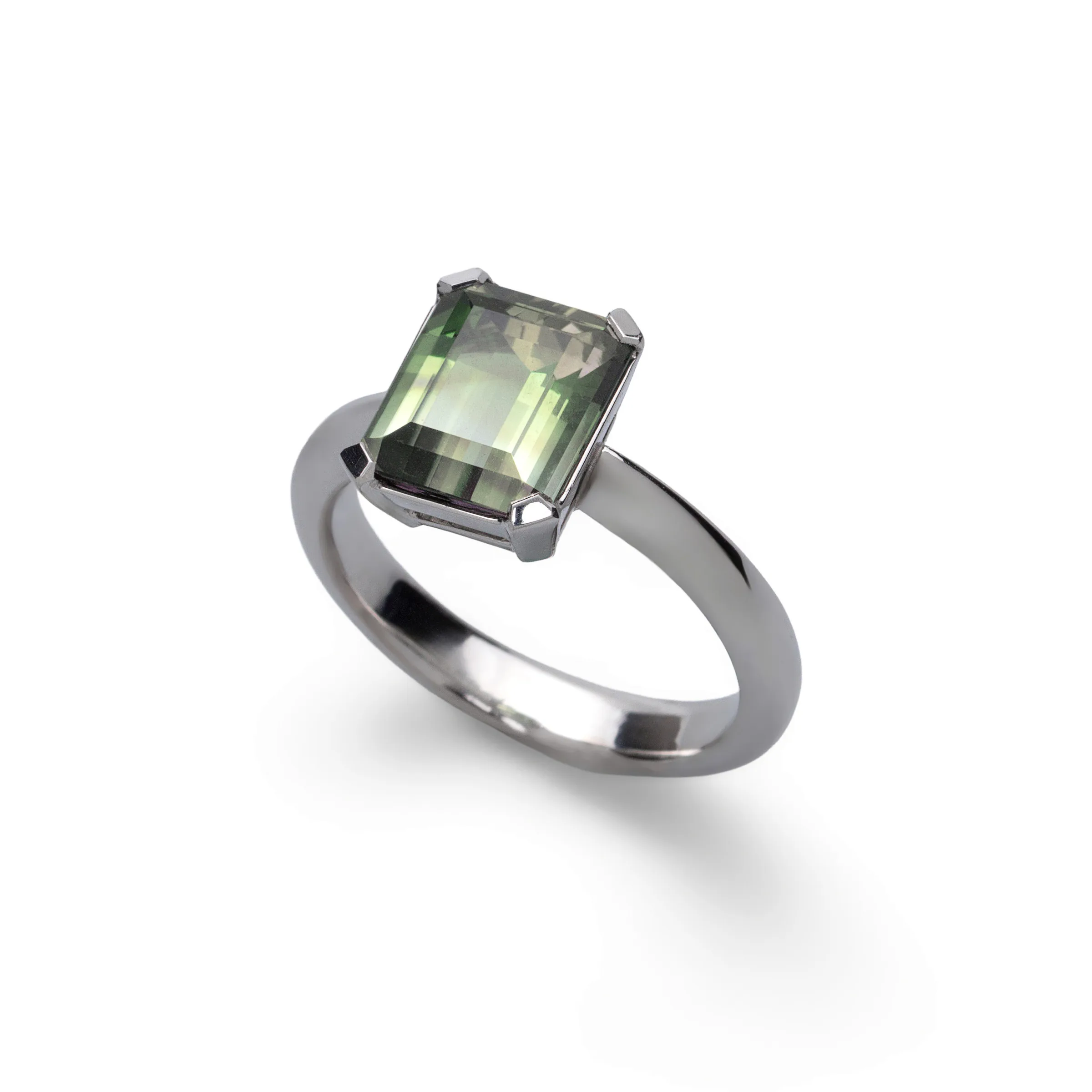
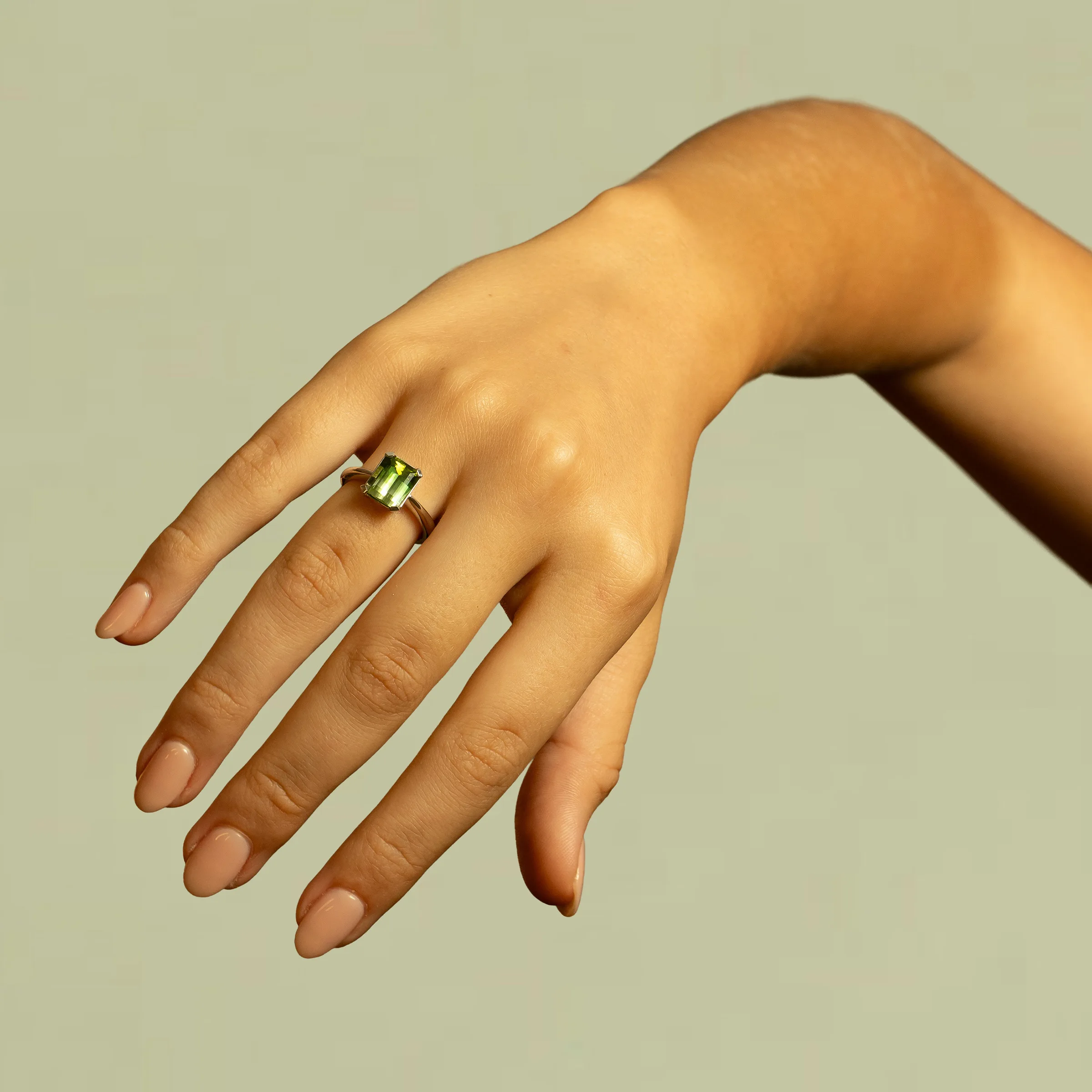
Ring in white gold with a rectangular tourmaline
CHF 3'800.00 incl. VAT
Tourmaline is the most colourful of all gemstones.
Tourmaline is the most colourful of all gemstones. Its name probably derives from the Sinhalese word “turamali”, which roughly means “stone with mixed colours”.
The extraordinary variety of colour in tourmaline is due to its complex chemical composition and the incorporation of various colouring trace elements into the crystal lattice. These include in particular iron, manganese, chromium, vanadium and copper.
During crystal growth in pegmatitic residual melts, the chemical conditions can change. As a result, different trace elements are incorporated. In this way even multicoloured tourmalines can form, such as watermelon tourmaline.
The trace elements absorb certain wavelengths of white light. The wavelengths that are not absorbed determine the perceived colour, from colourless through green, blue and red to multicoloured crystals.
The Paraíba tourmalines from Brazil are famous. The original locality lies near Batalha in the state of Paraíba. Copper-bearing tourmalines were later also found in Mozambique and other source regions. In Paraíba tourmaline, copper is the decisive colouring trace element; manganese may also be involved.
Indicolite is the name given to the blue variety. Verdelite is the green variety, whose colour is caused mainly by iron and in part by vanadium. The red to pink variety is called rubellite and owes its colour predominantly to manganese.
Important sources are Brazil, Mozambique, Afghanistan, Pakistan, Madagascar, the Democratic Republic of the Congo and the USA.
With a Mohs hardness of about 7 to 7.5, tourmaline is a relatively hard gemstone and well suited to jewellery. Like all gemstones, it should nevertheless be protected from hard knocks.
Ring in white gold with a rectangular tourmaline
CHF 3'800.00 incl. VAT
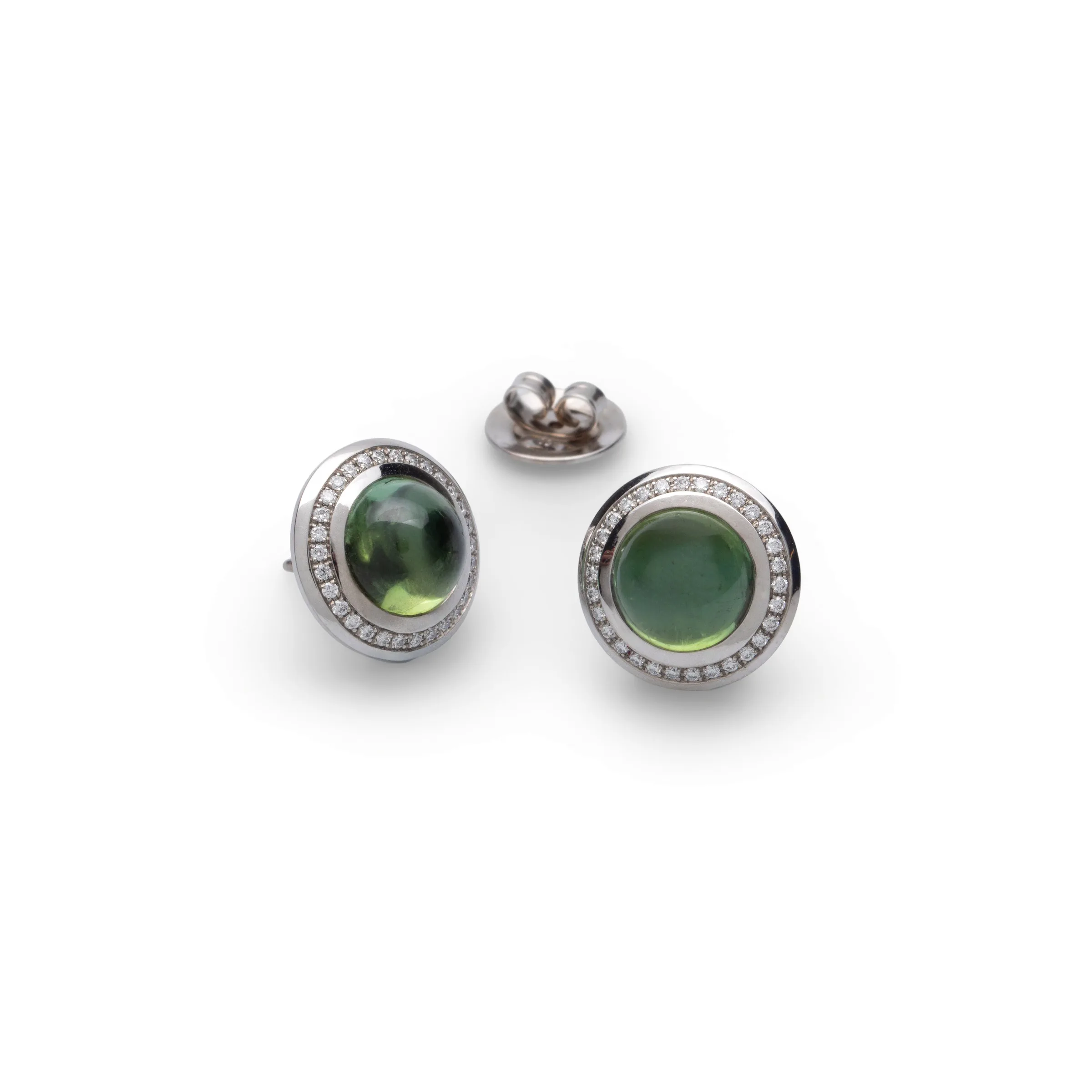
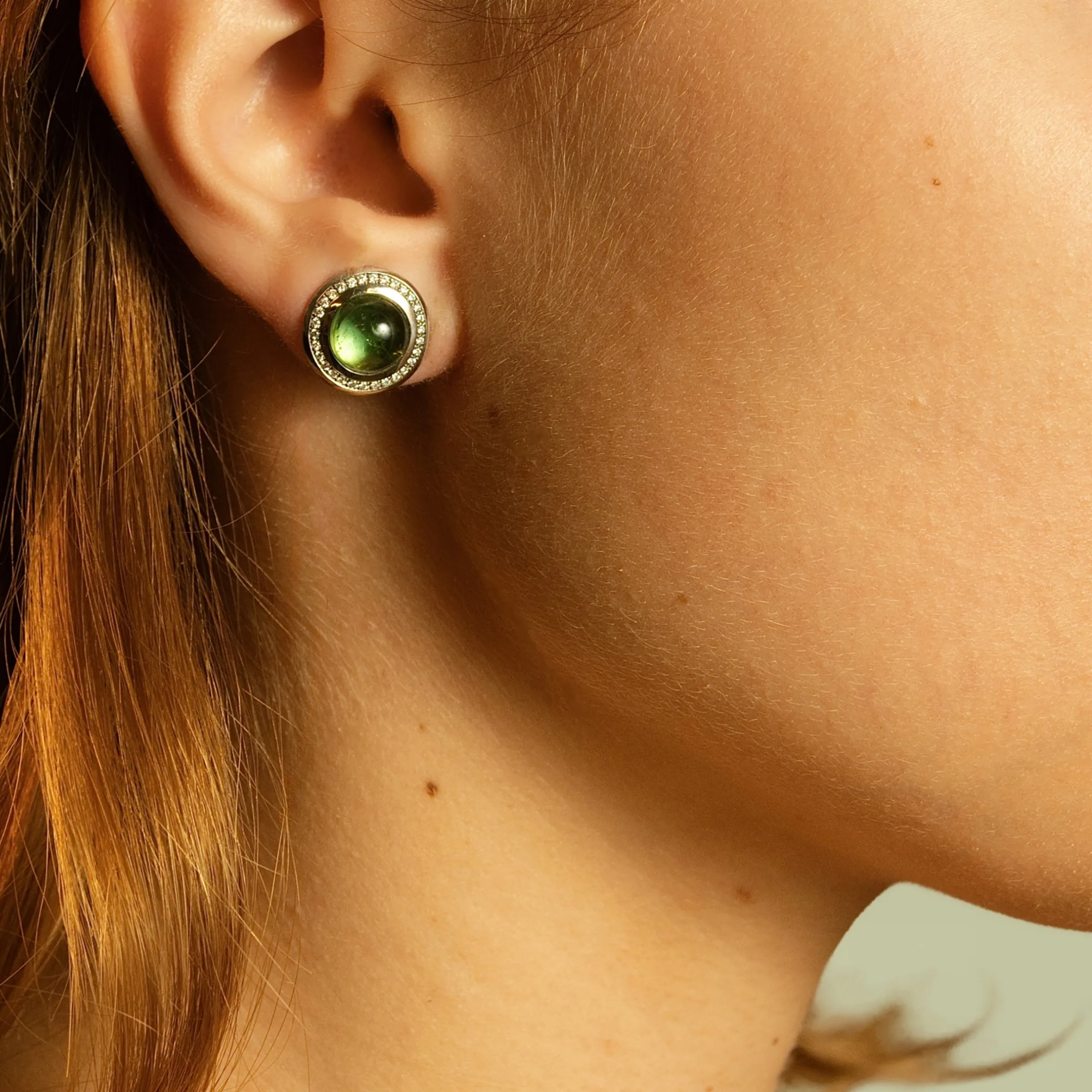
Stud earrings in white gold with two tourmalines and 60 diamonds
CHF 5'600.00 incl. VAT
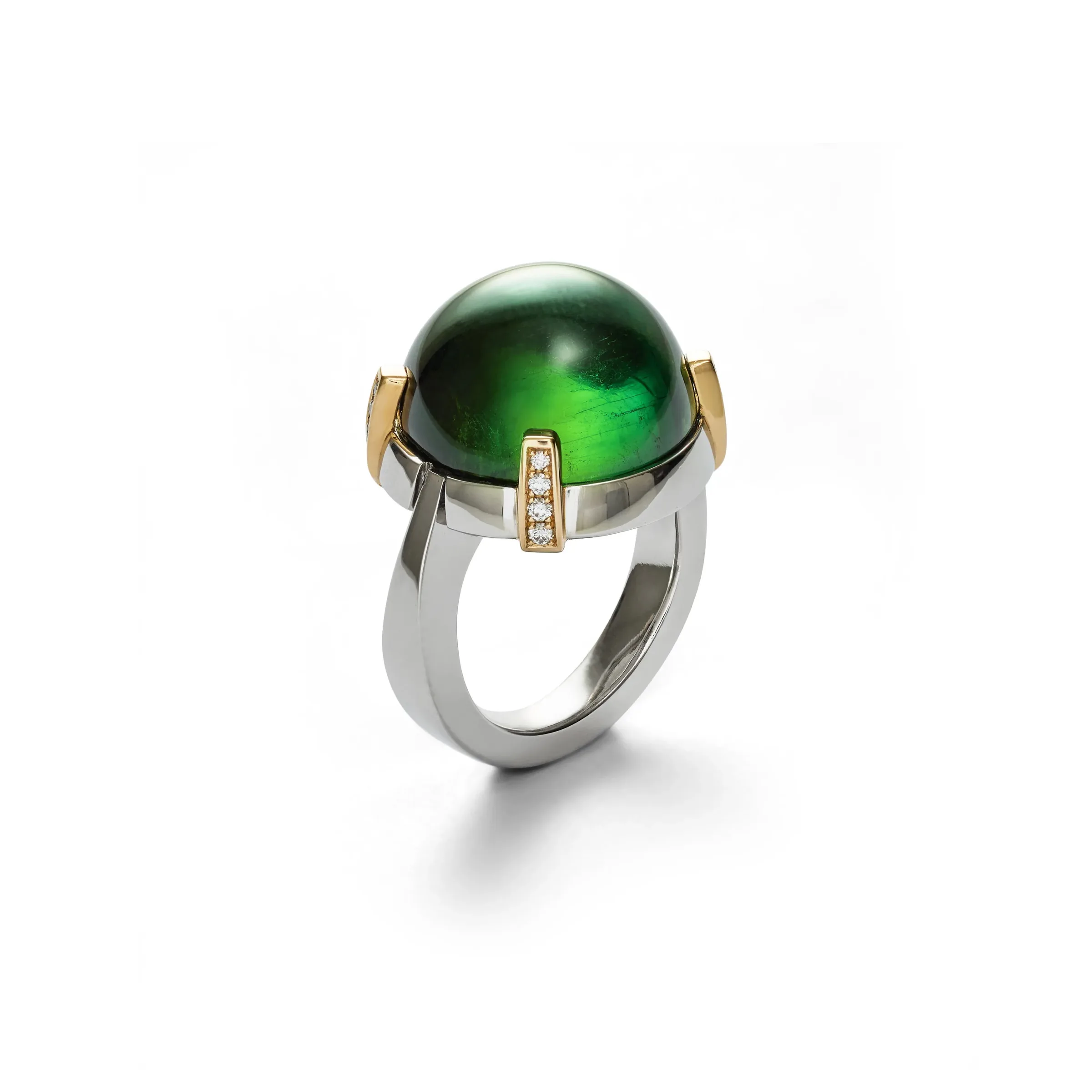
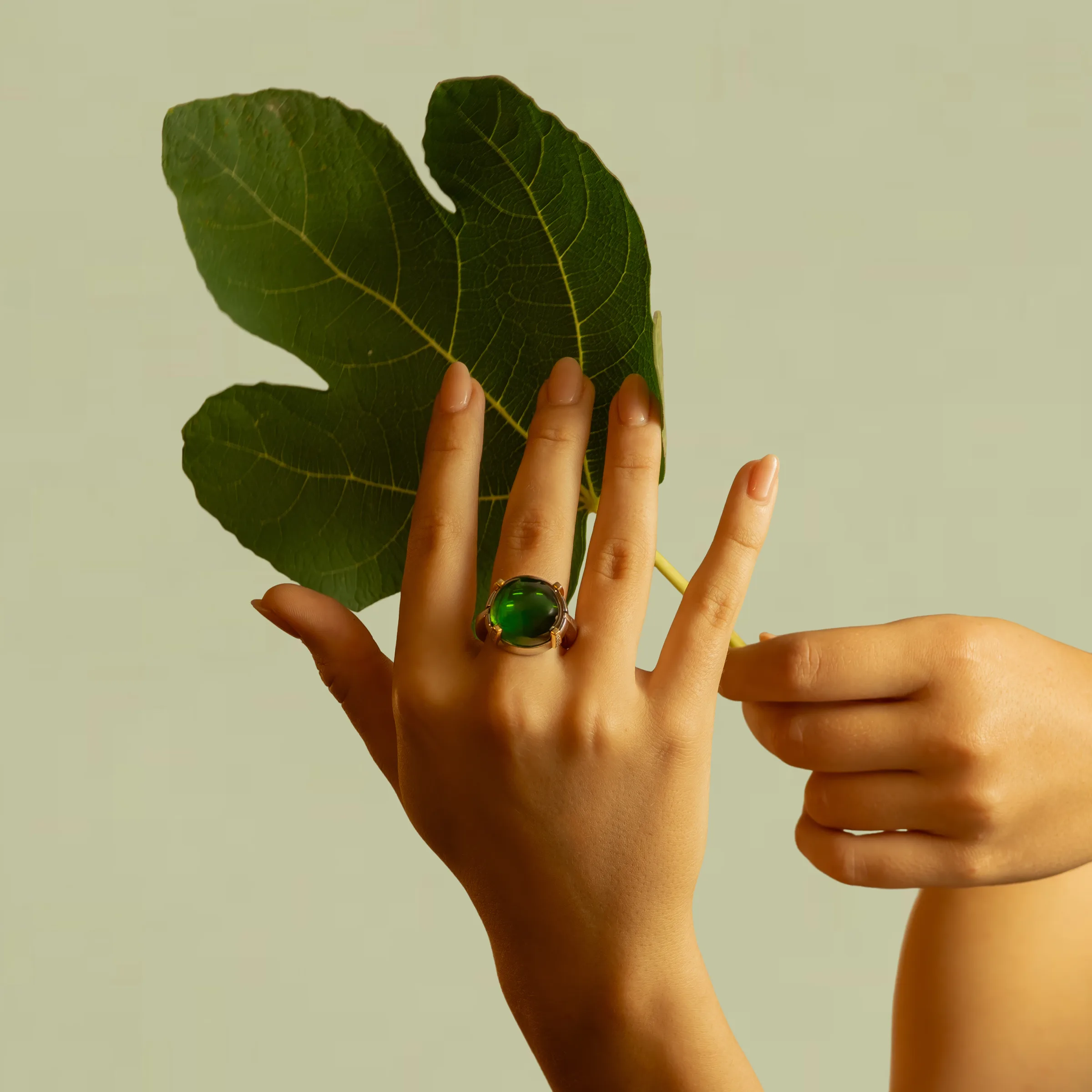
Ring in platinum 950 and rose gold 750 with a tourmaline cabochon
CHF 15'000.00 incl. VAT
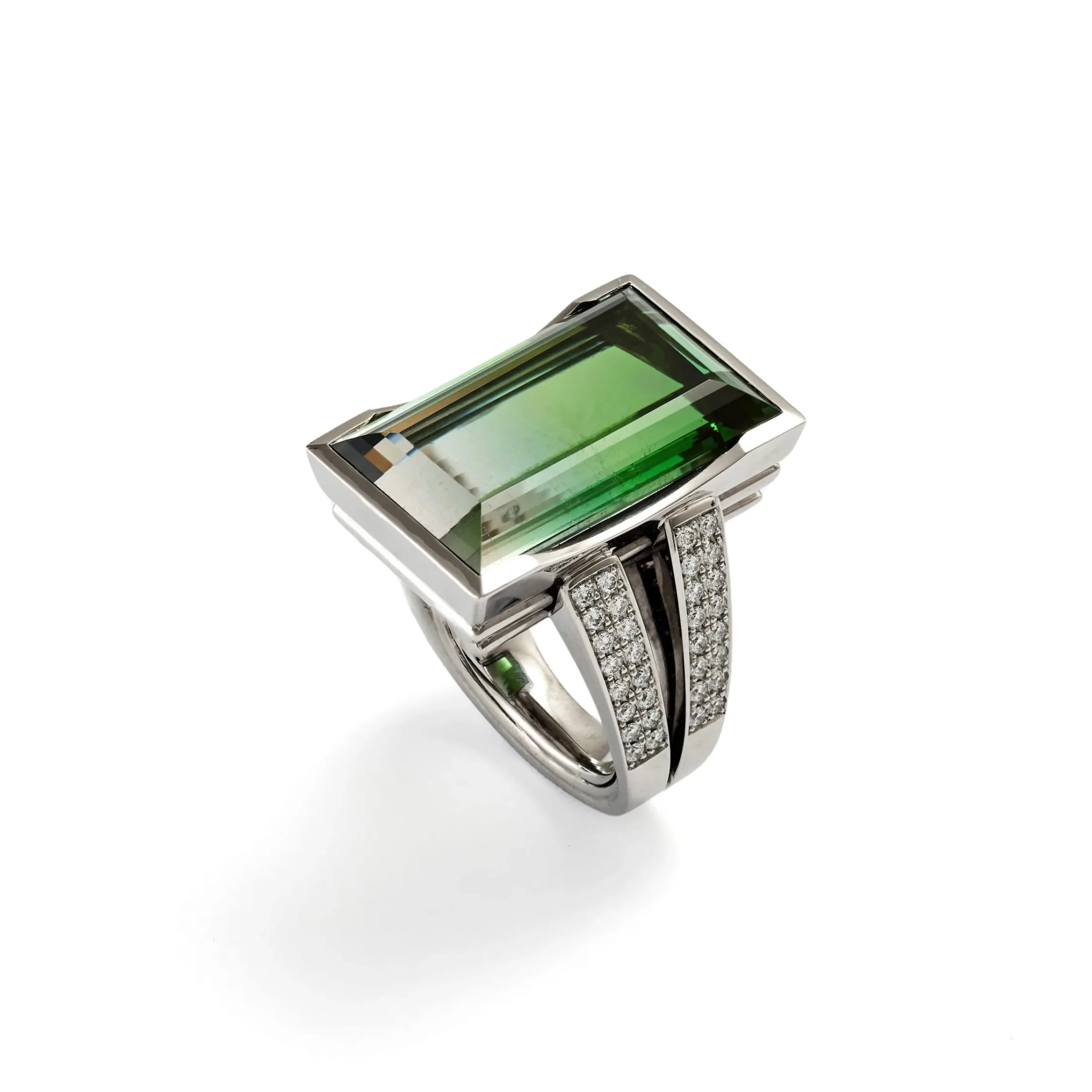
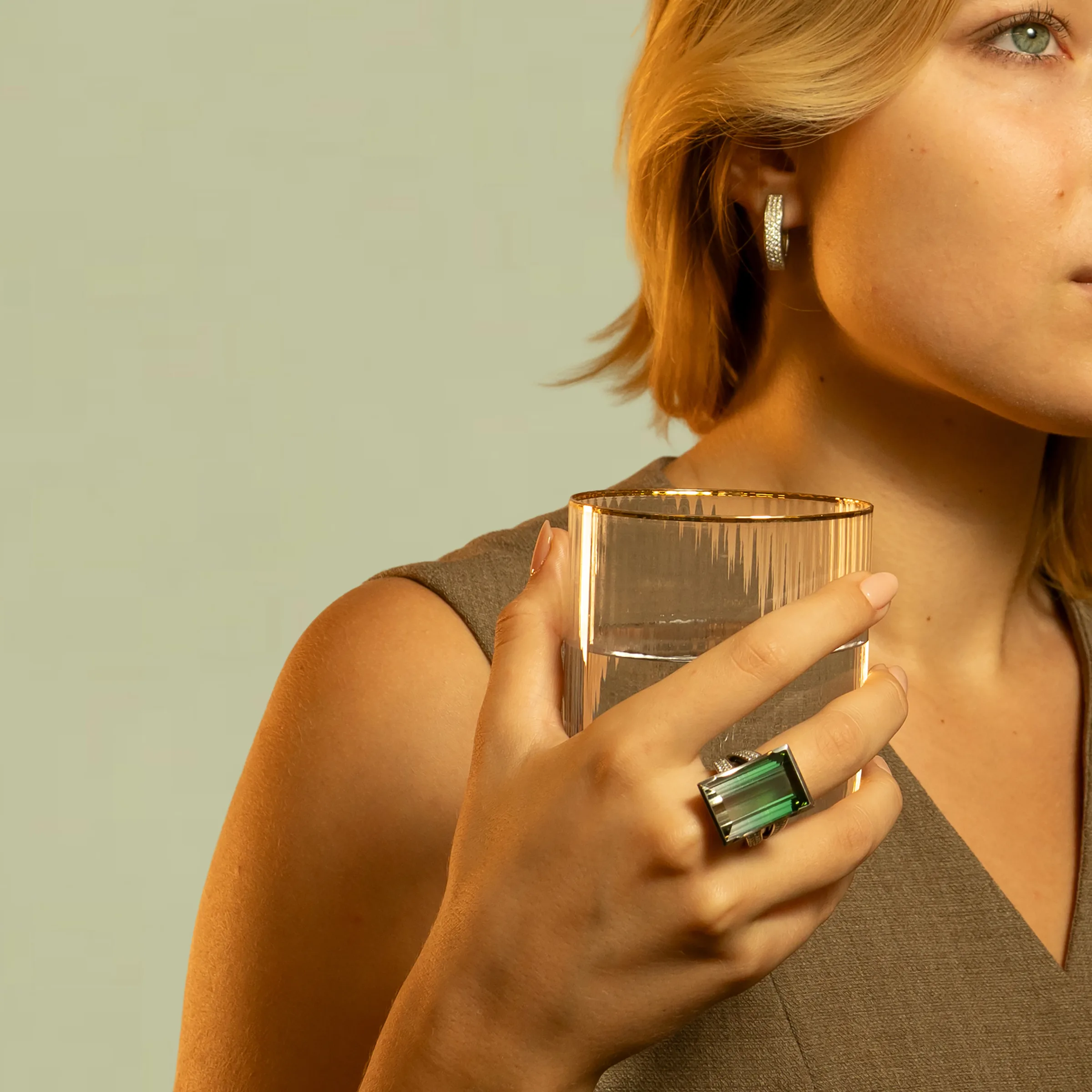
Ring in white gold with a tourmaline 29.55 ct and pavé diamonds
CHF 23'000.00 incl. VAT
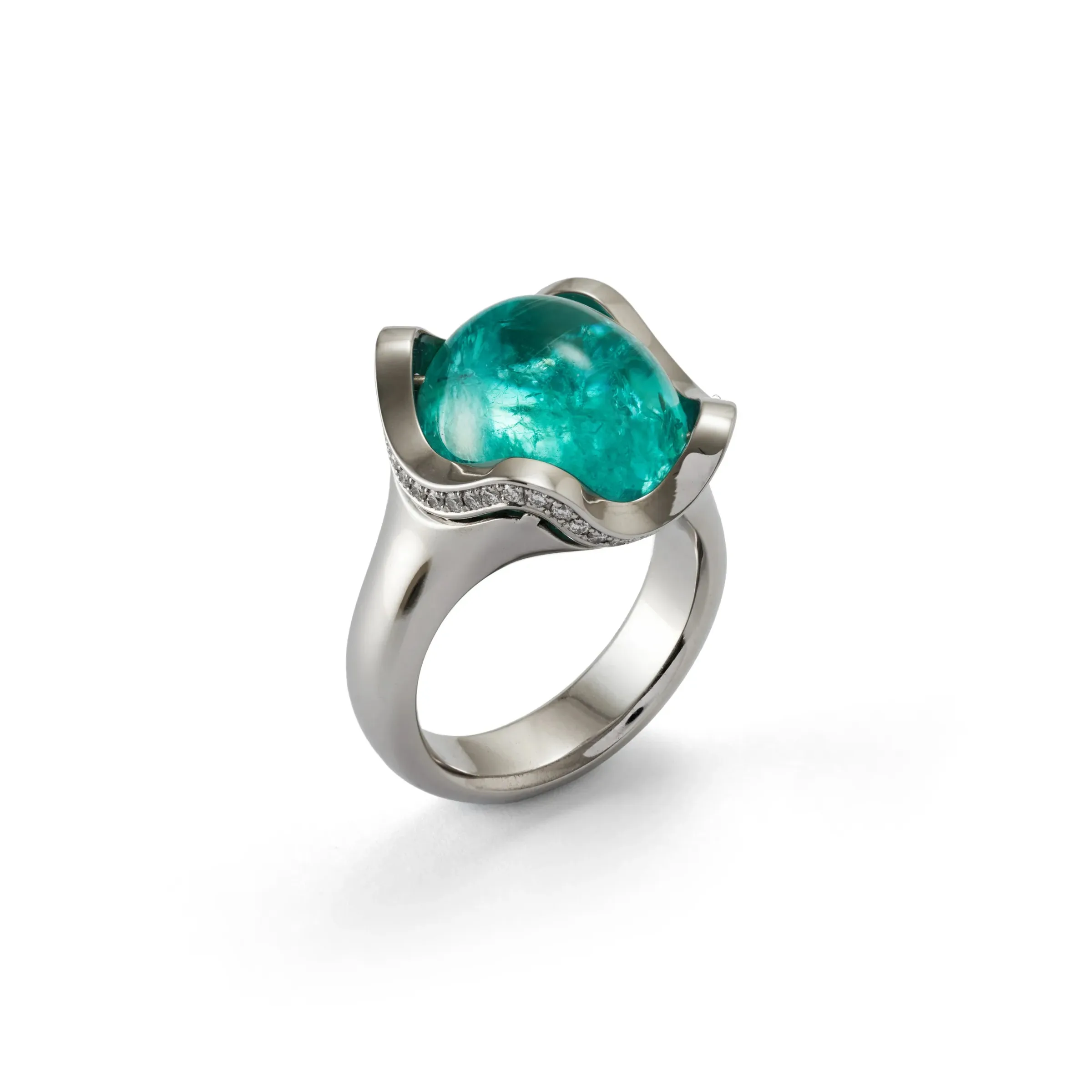
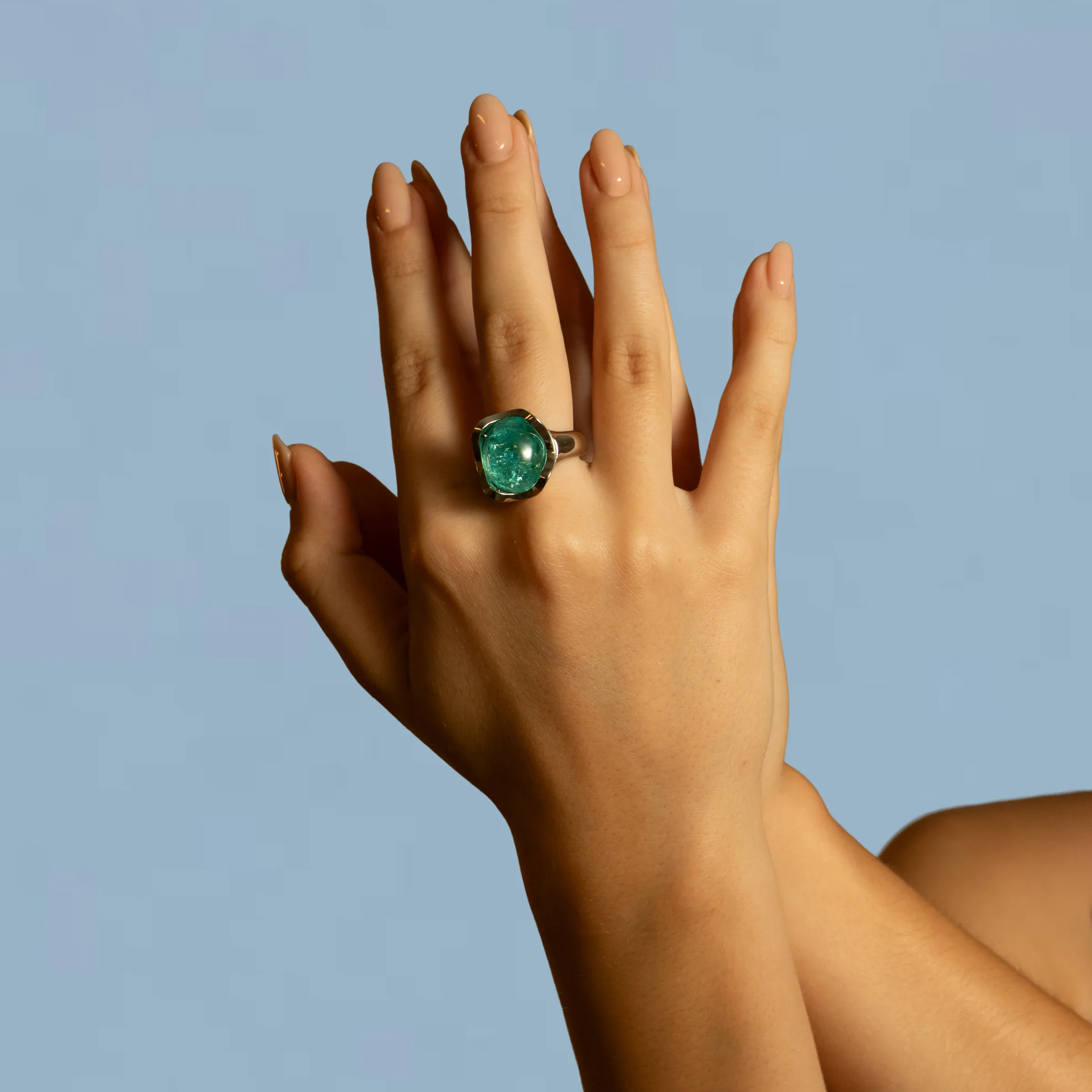
Ring in white gold with a Paraíba tourmaline 16.4 ct and diamonds
CHF 54'000.00 incl. VAT