

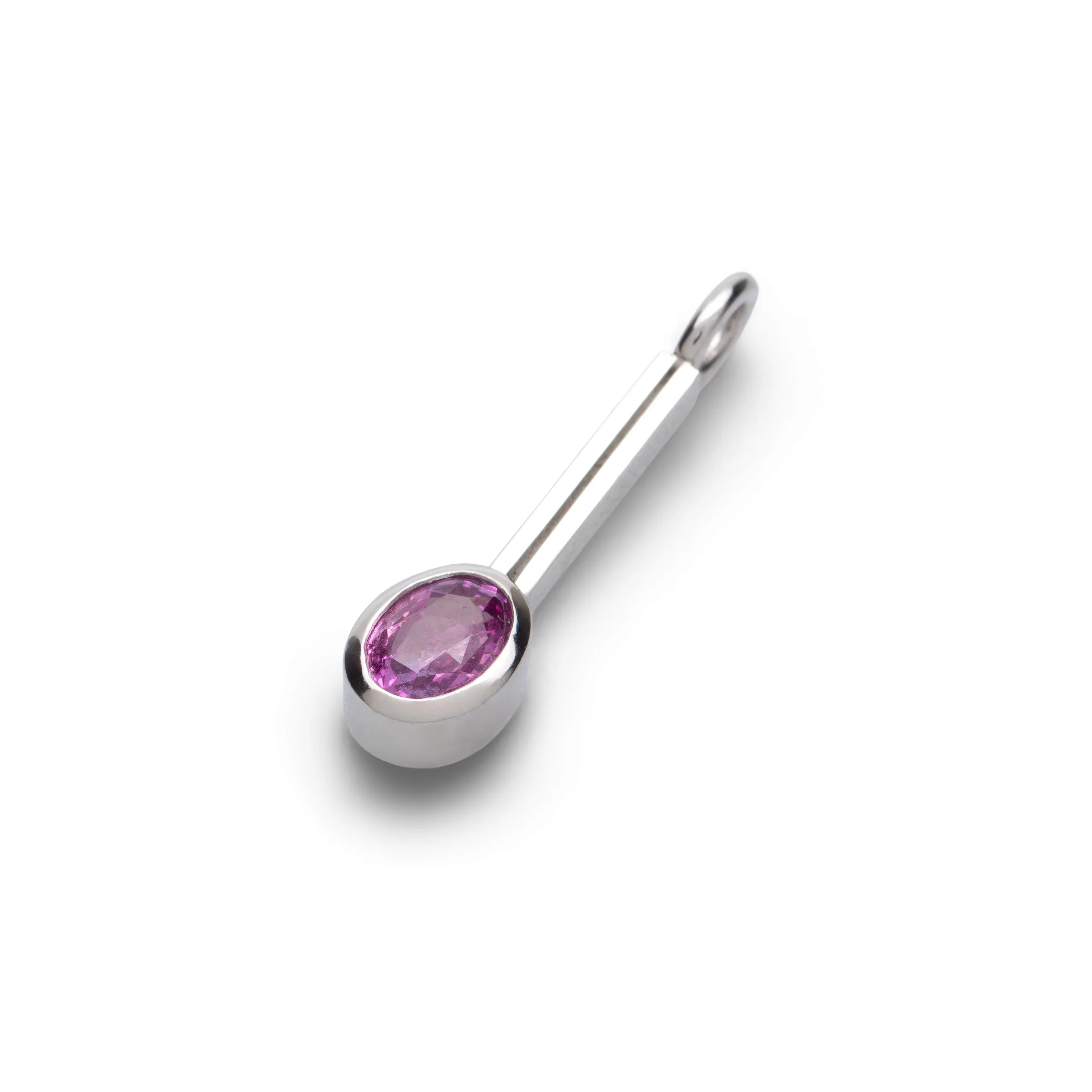
Pendant in white gold with 1 ruby
CHF 1'600.00 CHF 1'200.00 incl. VAT
Ruby is the red variety of the mineral corundum, an aluminium oxide.
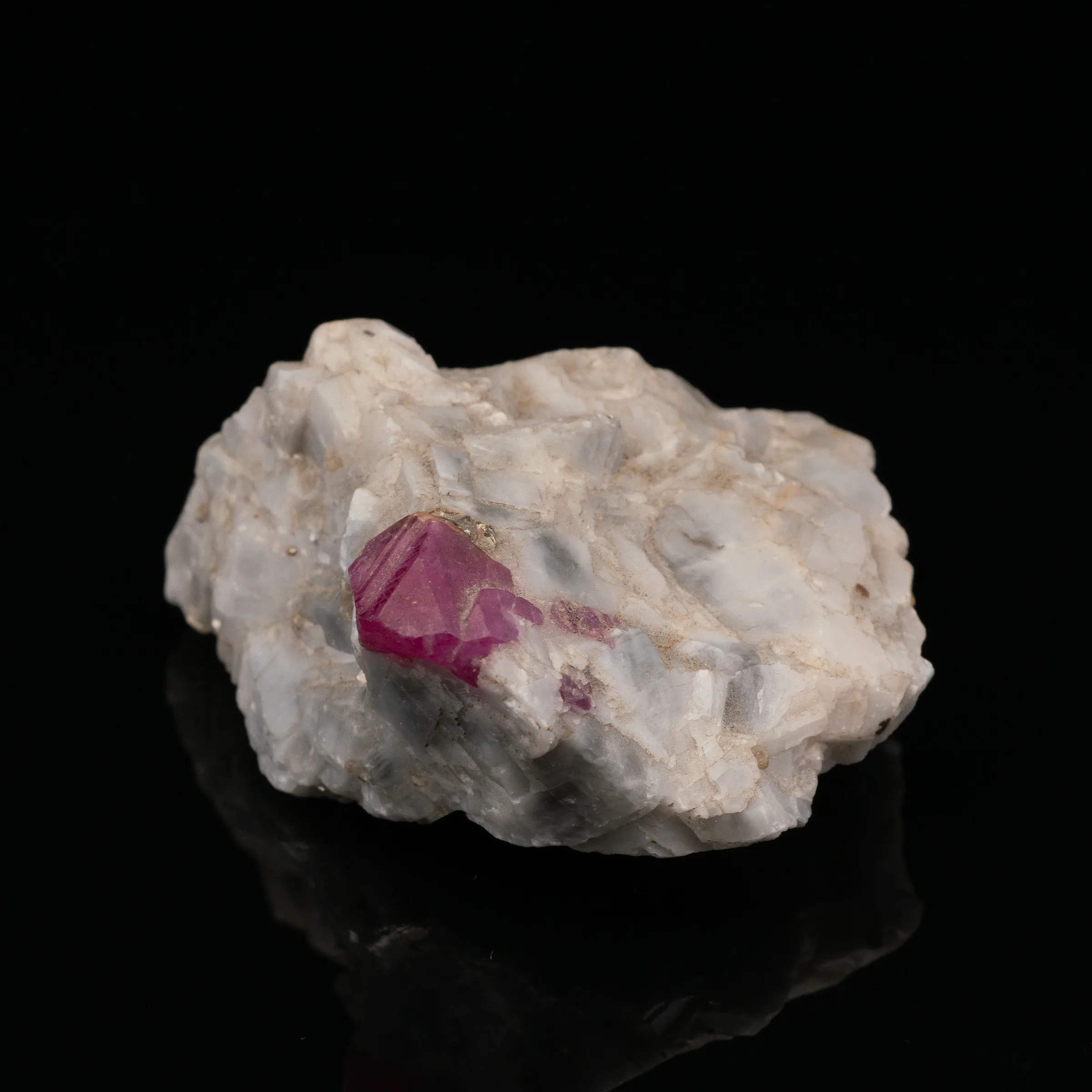
Ruby is the red variety of the mineral corundum, an aluminium oxide. The gemstone owes its red colour to the trace element chromium.
Rubies form mainly in two geological environments: in metamorphic marble and in volcanic or basaltic rock.
Ruby has a hardness of 9 on the Mohs scale, making it one of the hardest natural minerals after diamond. Its hardness and toughness make it an excellent gemstone for jewellery.
The most sought-after colour is known as “pigeon blood red”, a vivid red with a slight bluish tint and exceptional luminosity.
Rubies often show fluorescence under UV light. Particularly in rubies from marble deposits, this can contribute to their intense glow.
The most famous historical occurrences are in Myanmar. The Valley of Rubies, with Mogok and Kyatpyin, lies north of Mandalay. For centuries, some of the finest rubies in the world have been found there.
A local legend tells of Nga Mauk, who found an exceptionally large ruby and split it. One part went to the king; the other is said to have returned to the court later by way of a Chinese merchant. The story remains part of Burmese ruby tradition to this day.
The “Sunrise Ruby”, 25.59 ct, in the coveted pigeon blood colour and of Burmese origin, was sold in 2015 for 30.3 million US dollars.
Significant ruby deposits are found today in Myanmar, Mozambique, Madagascar, Thailand and Vietnam.
Pendant in white gold with 1 ruby
CHF 1'600.00 CHF 1'200.00 incl. VAT
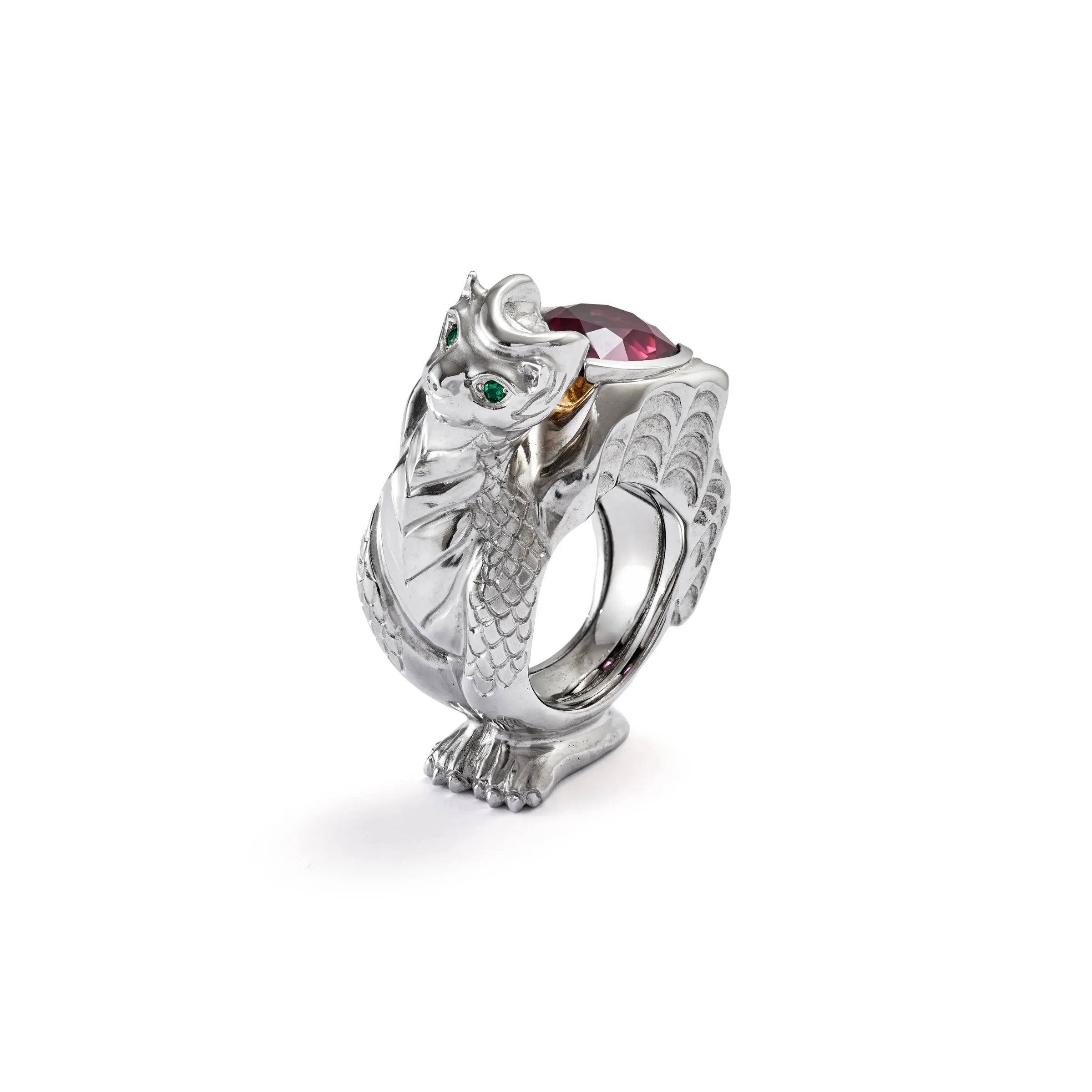
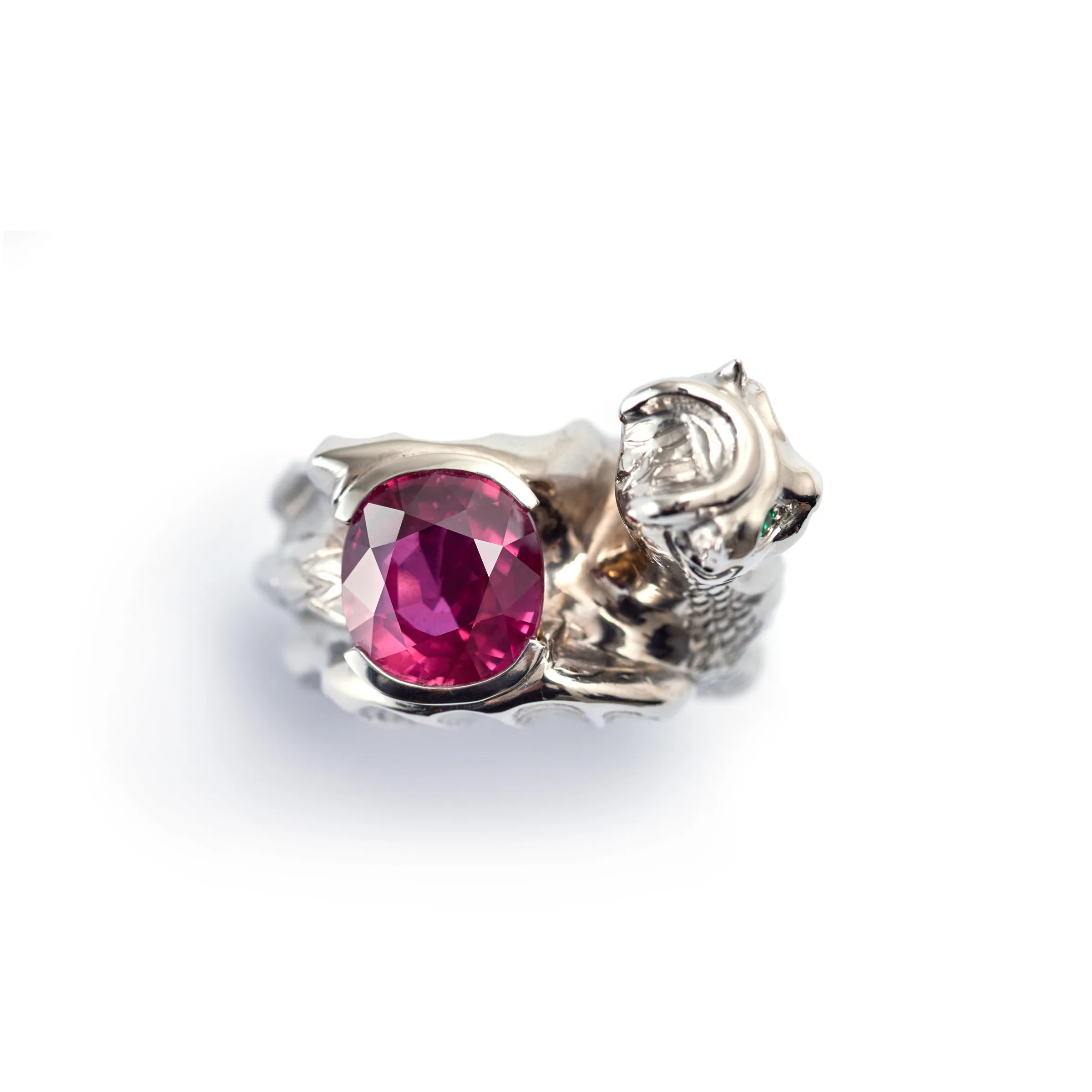
Dragon ring in white and rose gold with a ruby and 2 emeralds
Sold
View