

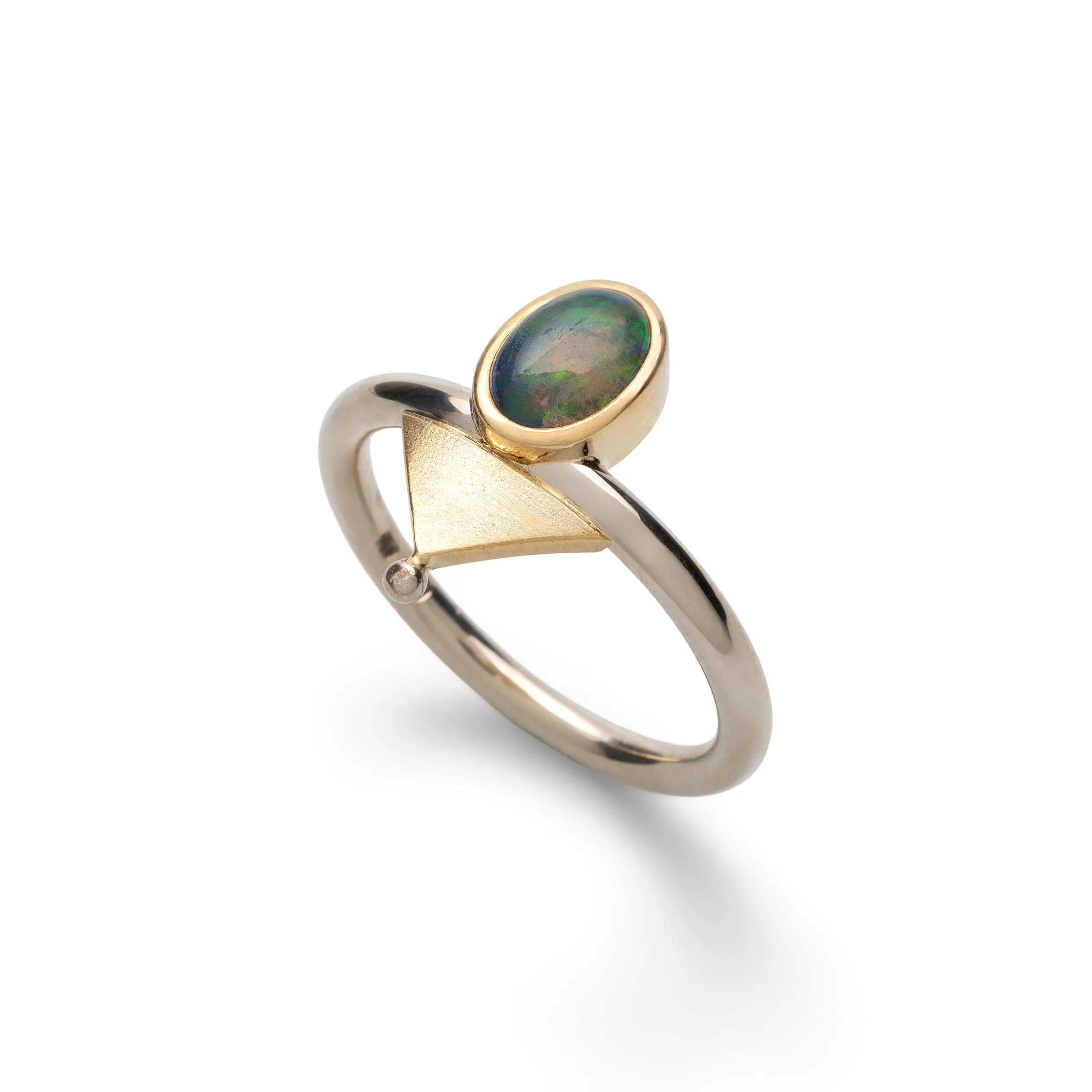
Ring in white and yellow gold with an opal
CHF 2'600.00 CHF 1'500.00 incl. VAT
Opal is a gemstone that stands apart for its fascinating play of colour.
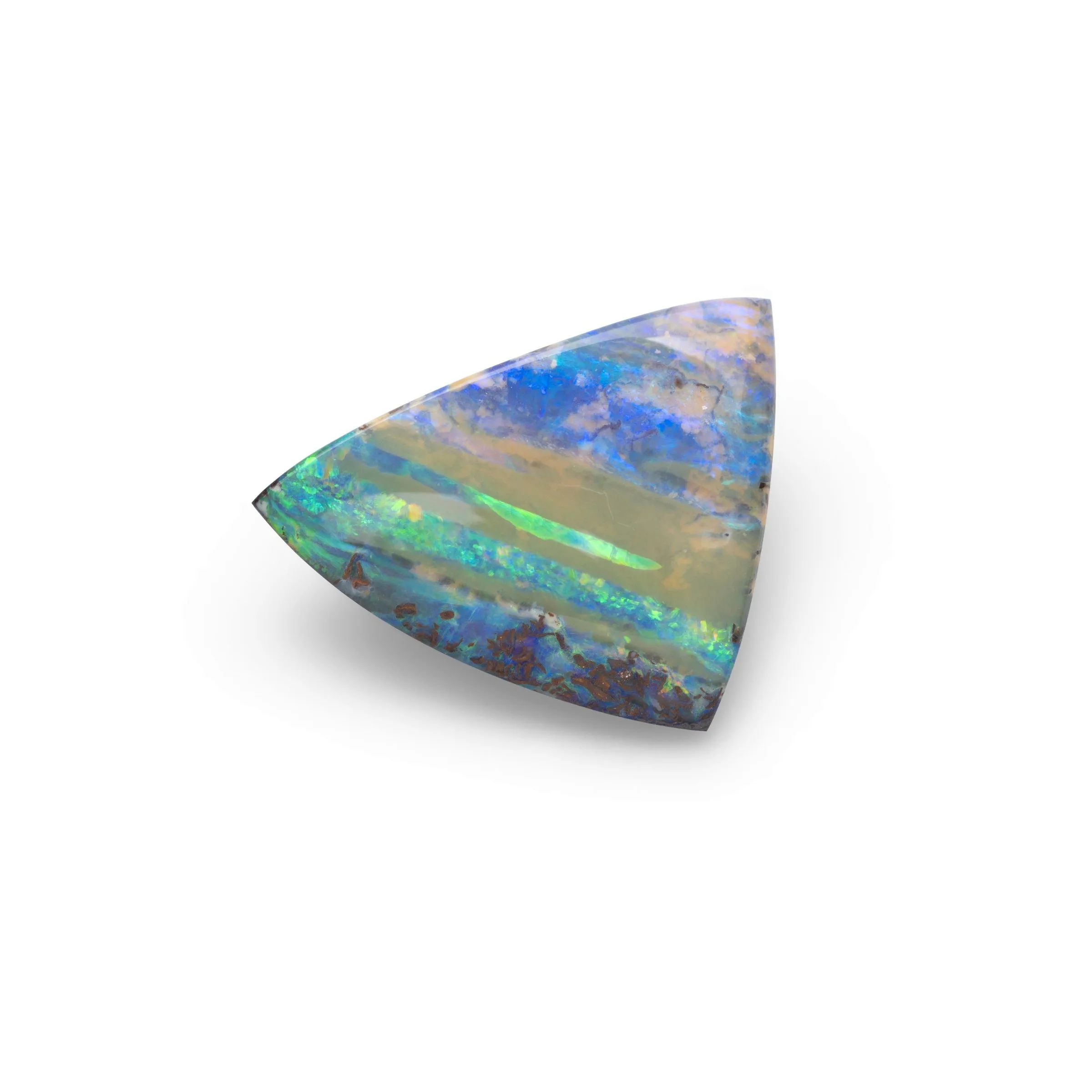
Opal is a gemstone that stands apart for its fascinating play of colour. The name derives from the Latin “opalus”.
The Romans in particular prized opal for its extraordinary play of colour. A famous anecdote tells of the Roman senator Nonius, who preferred to leave Rome rather than surrender his magnificent opal to Mark Antony, who coveted it for Cleopatra.
An important historical source of European opal was the deposits of Dubník in present-day Slovakia. For a long time opal was regarded as a lucky stone, but later fell into disrepute for a time through superstition and legend.
With the great finds in Australia, opal regained its importance. Lightning Ridge and Coober Pedy are among the most famous localities. In the 19th century, Queen Victoria contributed significantly to the renewed popularity of opal.
Opal is not assigned to any crystal system, as it is an amorphous mineral. It has a Mohs hardness of about 5.5 to 6.5 and contains a variable proportion of water. For this reason it demands a little more care in working and in wearing.
Opal consists of hydrated silica (SiO₂ · nH₂O). Tiny silica spheres, regularly arranged in precious opal, hold the secret of its play of colour. Incoming light is diffracted by this structure and interferes. This produces the luminous spectral colours of the rainbow.
There is also common opal or milk opal without a pronounced play of colour.
Black opal from Lightning Ridge in Australia is highly prized. Characteristic is its dark to black body tone, against which the play of colour stands out with particular intensity.
A special form is the harlequin opal, whose mosaic-like patches of colour recall the colourful costume of a harlequin and are especially rare.
Boulder opal from Queensland remains partly attached to its brown host rock. White and milky opals are among the best-known Australian types of opal.
Mexican fire opal shows intense yellow, orange to red body colours and has only in part a pronounced play of colour.
Opals from Welo in Ethiopia are frequently hydrophane: they can absorb water, which temporarily alters their transparency and appearance.
Ring in white and yellow gold with an opal
CHF 2'600.00 CHF 1'500.00 incl. VAT