

Alexandrite
This fascinating gemstone was discovered in the Urals in 1830 and named after the Russian tsar Alexander II.
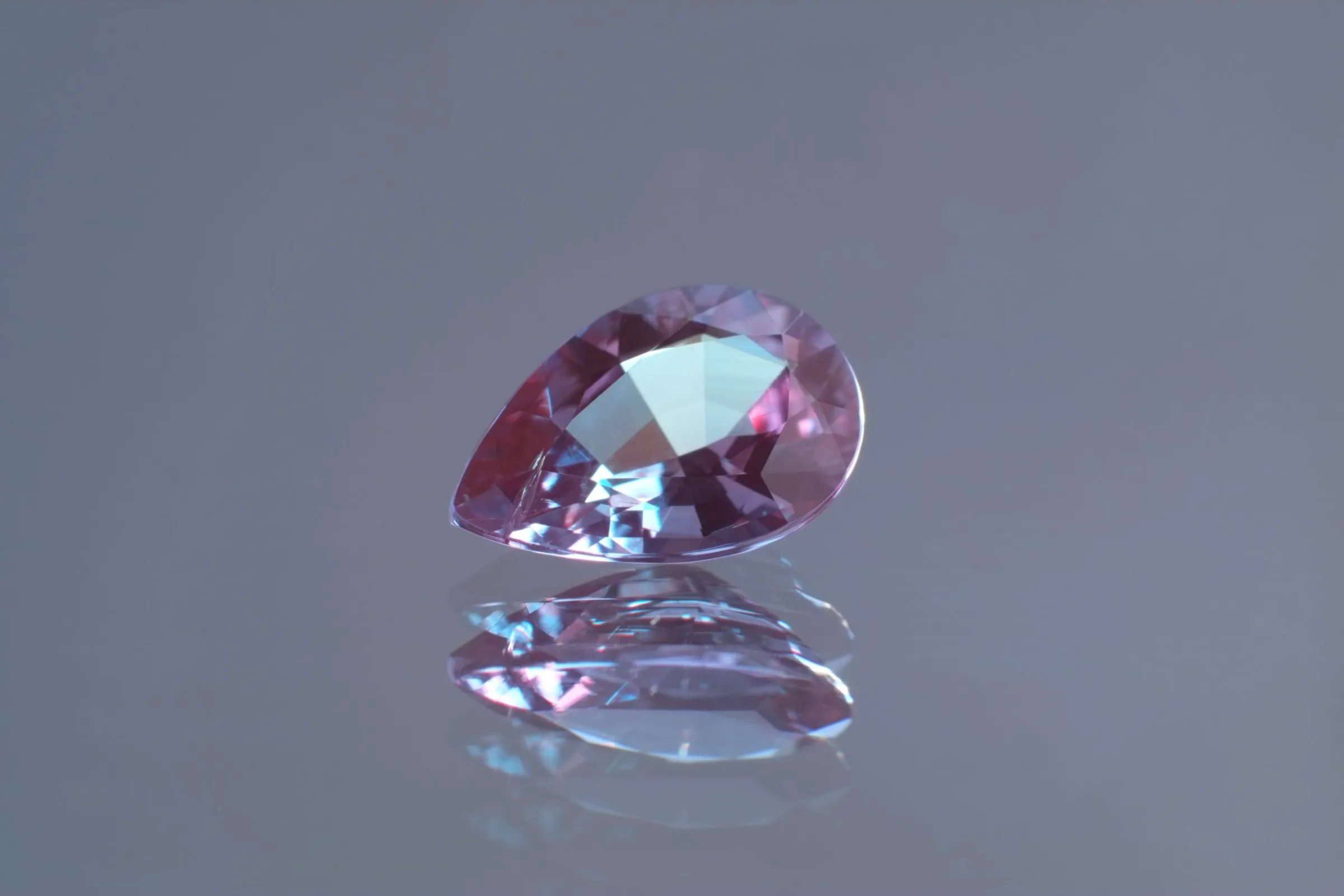
This fascinating gemstone was discovered in the Urals in 1830 and named after the Russian tsar Alexander II. Its colours, green and red, happened to match the colours of the imperial guard, which made it a symbol of the Russian nobility.
Alexandrite is one of the rarest classic gemstones in the world. High-quality natural stones with a pronounced colour change are considerably rarer than many rubies, sapphires or emeralds. Large specimens of more than 5 ct are exceptional collector’s pieces.
The colour change is what makes it special
The colour change is caused by the selective absorption of light by chromium ions. Different light sources have different spectra, so the stone appears in a different colour depending on the illumination.
In daylight, a high-quality alexandrite usually appears green, olive green to bluish green. In candlelight or incandescent light it can appear red, purplish red, raspberry red, brownish red or reddish violet. The stronger and more distinct the colour change, the more sought after the stone.
Alexandrite is a variety of the mineral chrysoberyl. The colouring trace element is chromium.
With a Mohs hardness of 8.5, alexandrite is well suited to being worked into jewellery.
The distinction between natural and synthetic alexandrites is particularly important. Synthetic stones have been on the market for many decades. A gemmologist can distinguish natural from synthetic alexandrites using, among other instruments, a spectroscope and a microscope.
Important occurrences are in Russia, Brazil, Sri Lanka, India, Tanzania and Madagascar.