

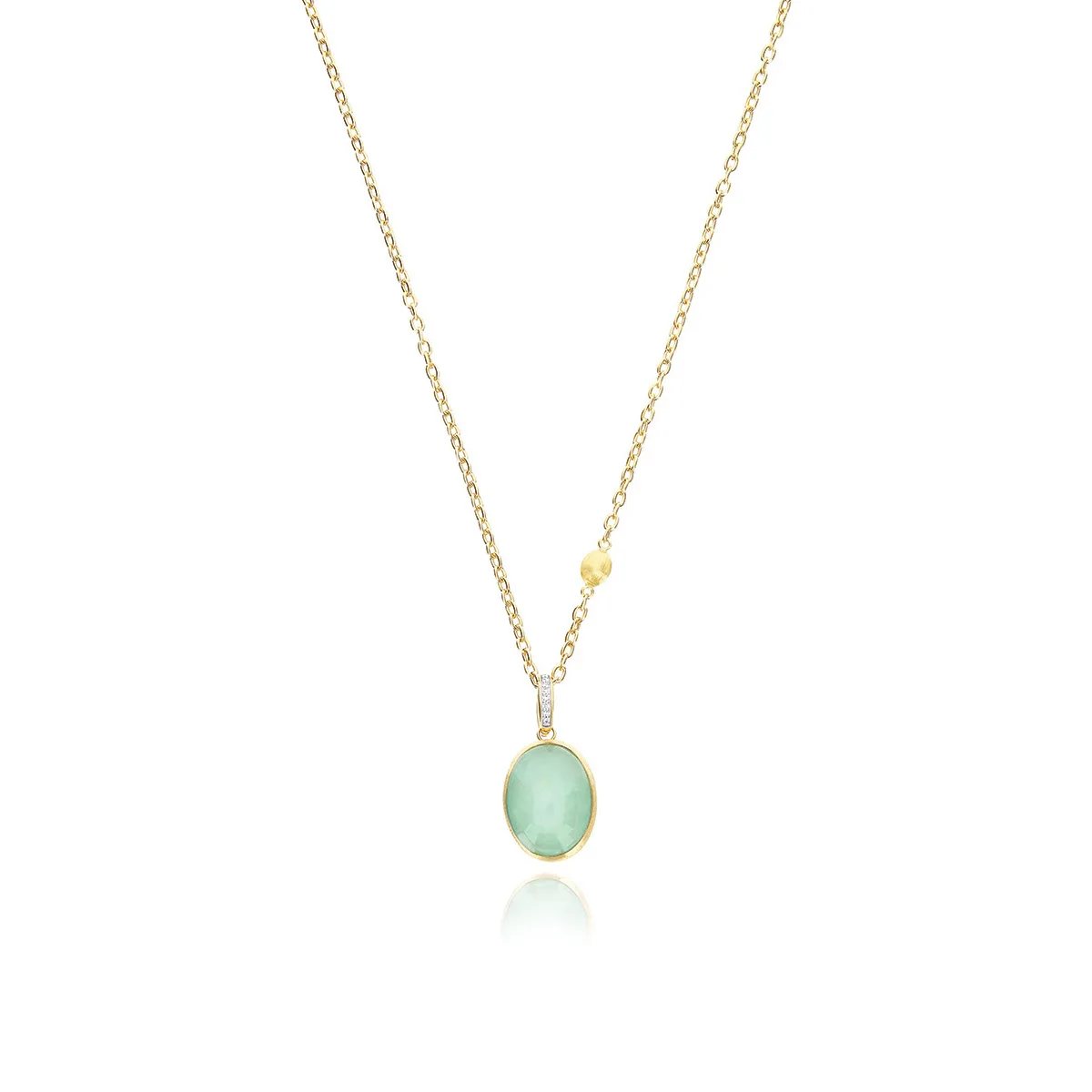
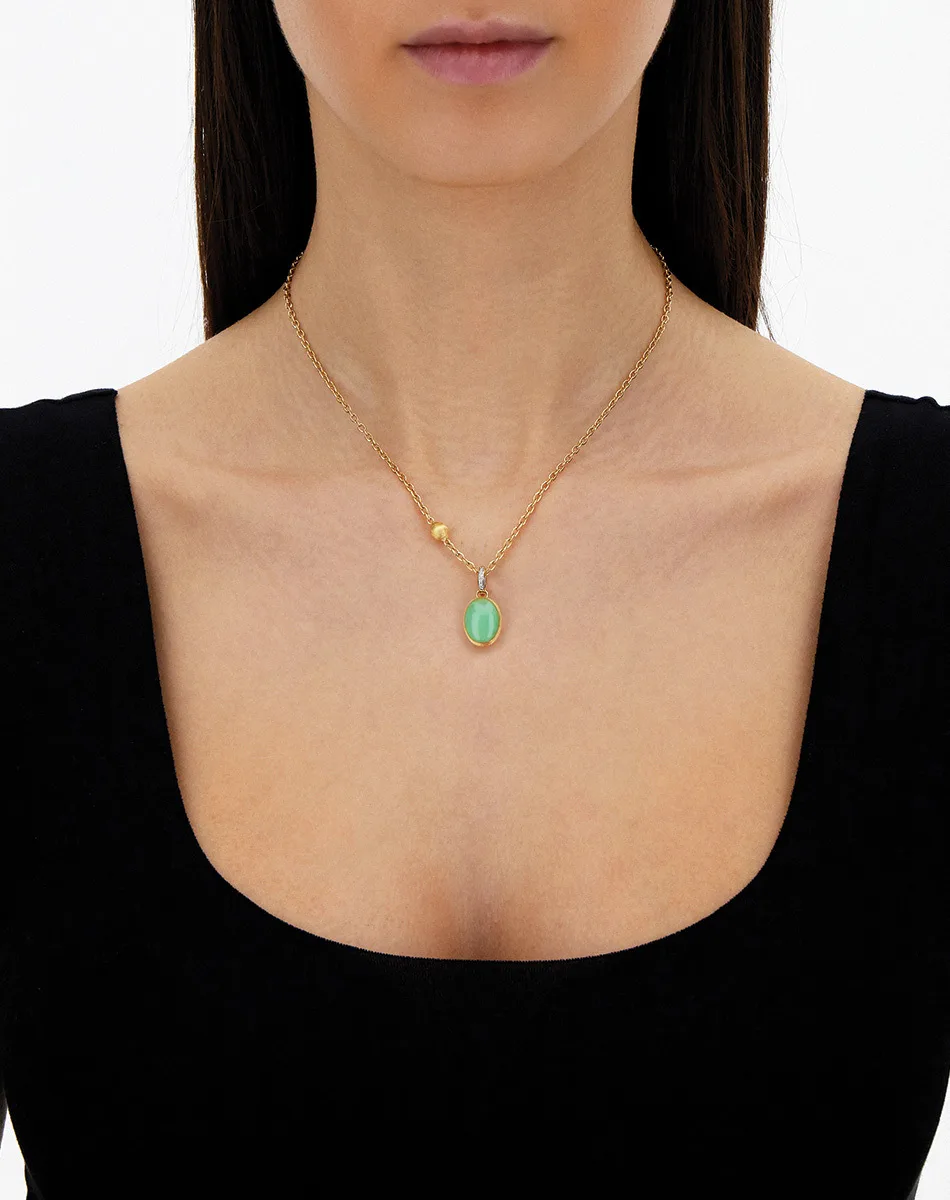
CHF 1'830.00 incl. VAT
Jade
Like no other stone, jade is deeply bound up with Asian culture.
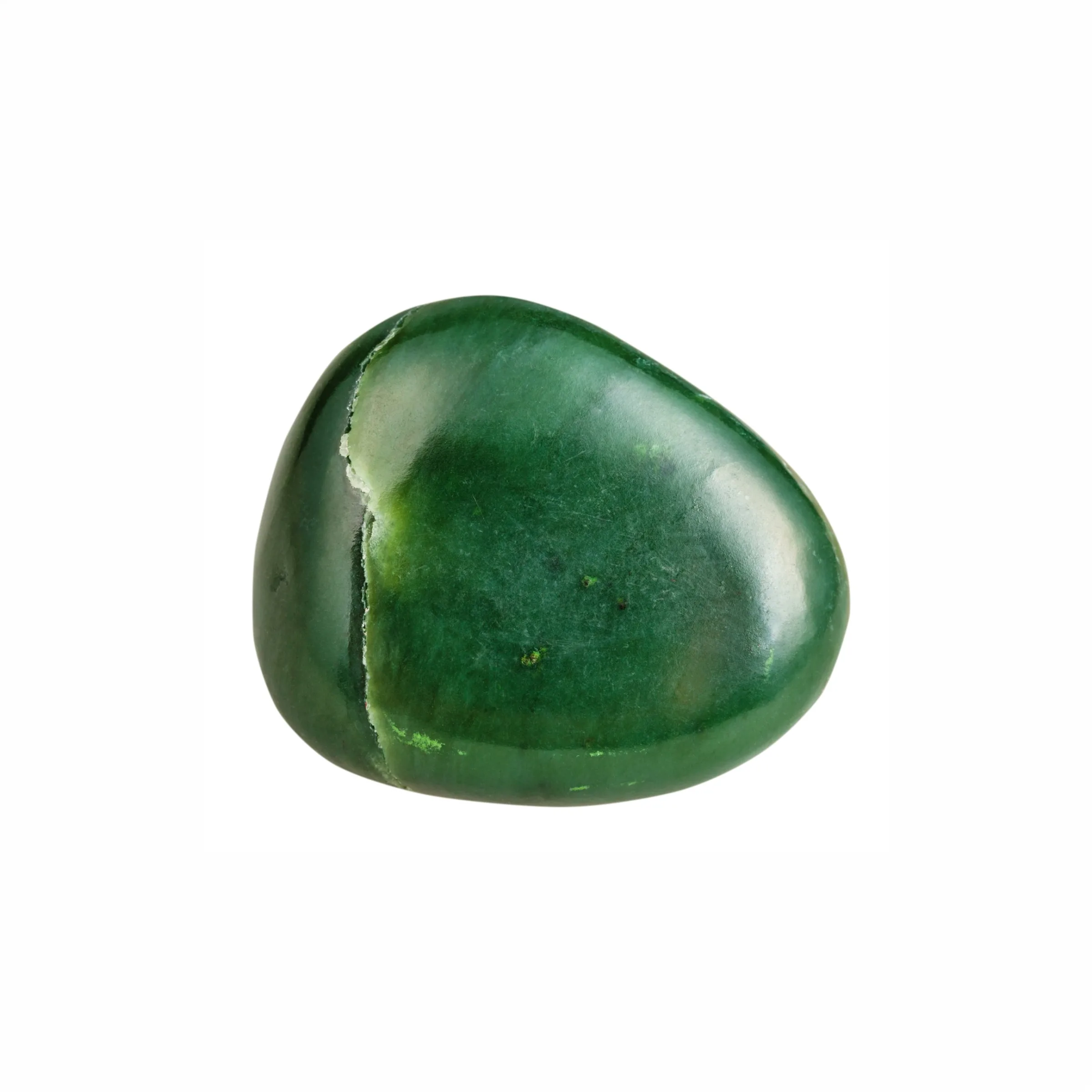
Like no other stone, jade is deeply bound up with Asian culture. A fundamental distinction is made between jadeite and nephrite.
Jadeite belongs to the pyroxene group and is somewhat harder than nephrite, which belongs to the amphibole group. In jadeite, the green colour arises among other things from traces of chromium; other elements and structural peculiarities lead to colours such as white, lavender, yellow, orange, brown or black.
Where transparency matters in many gemstones alongside colour and clarity, in jade it is above all translucency that plays an important role. Its gentle, often soft lustre has fascinated people for centuries. Its extraordinary toughness makes jade very durable, but also demanding to work and polish.
In China, jade was associated with status and power from early on. As early as the first millennium BC, jade played an important part in court ceremonies. High-ranking figures received, among other things, honours and ceremonial objects of carved jade.
Fei Cui, today the Chinese term for jadeite, historically goes back to the name of brightly coloured kingfishers. Their vivid red and green feathers were prized for adornment and decoration.
In Europe too, jade was already of great importance in the Neolithic as a material for axes and adzes and was traded over great distances. A significant European source of jadeitite lay in the region of Monte Viso in the Italian Alps.
On the Mohs scale, jadeite reaches about 6.5 to 7 and nephrite about 6 to 6.5. Even more remarkable than the hardness, however, is the material’s extraordinary toughness.
The finest imperial jadeite still achieves record prices at international auctions today. The Hutton-Mdivani jadeite necklace is one of the most legendary jewels in the world. It consists of 27 exceptionally fine imperial jadeite beads. In 2014 it was sold at Sotheby’s in Hong Kong for 214 million Hong Kong dollars and acquired by the Cartier Collection.
Gemmology
The term jade covers two different mineral materials: jadeite and nephrite. What is special about jade lies less in its hardness than in its extraordinary toughness. The densely interwoven, fibrous structure of nephrite in particular makes the material extremely resistant to breakage.
In high-quality jadeite, besides colour, it is above all translucency, fine texture and even distribution of colour that are decisive. The most sought-after quality is so-called imperial jadeite: an intense, vivid green with high translucency and a very fine texture.
- Mineral group
- Jadeite: pyroxene · Nephrite: amphibole
- Mohs hardness
- Jadeite 6.5 to 7 · Nephrite 6 to 6.5
- Density
- Jadeite approx. 3.30 to 3.38 · Nephrite approx. 2.90 to 3.10
- Refractive index
- Jadeite approx. 1.66 to 1.68 · Nephrite approx. 1.60 to 1.63
- Structure
- Jadeite fine-grained aggregate · Nephrite fibrous, densely interwoven
Jewellery with Jade
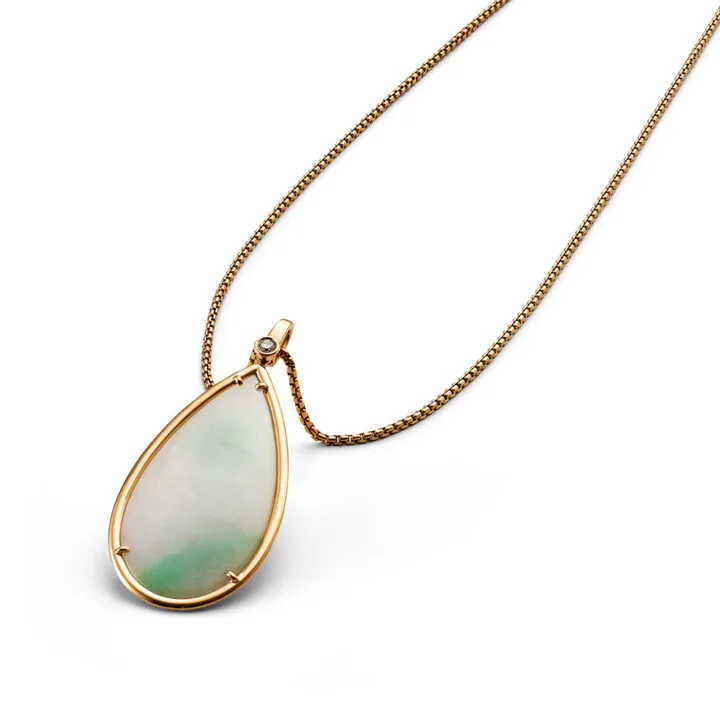
Pendant in rose gold with a jade drop and a diamond
CHF 3'800.00 incl. VAT